
Sarah Castle
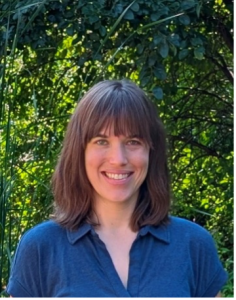
Assistant Professor
A231 Russell Labs
1630 Linden Drive
Madison, WI 53706
Phone: 608-263-7624
Email: sarah.castle@wisc.edu
Expertise
Agroforestry, policy and governance, impact evaluation, economics, sustainable livelihoods, remote sensing
Education/Experience
Education
| Degree | Institution | Major Field | Granted |
| B.A. | University of Texas at Austin | Aerospace Engineering | 2012 |
| M.Sc. | University of Illinois Urbana-Champaign | Natural Resources and Environmental Sciences | 2019 |
| Ph.D. | University of Illinois Urbana-Champaign | Natural Resources and Environmental Sciences | 2024 |
Professional Experience
| Institution | Title | Years |
| Yale School of the Environment | Postdoctoral Researcher | 2024-2025 |
Research
Current research is focused on the following themes: (1) agroforestry and climate-smart agriculture, (2) forests, policy, and livelihoods, (3) remote sensing of natural climate solutions within monitoring, evaluation, and learning (MEL) processes, and (4) sustainable practice adoption through the lens of climate adaptation and mitigation, biodiversity conservation, equity, and livelihoods.
For more information on Prof. Castle’s research, visit the research page on her lab website.
Courses Taught
Agroforestry System (FWE 375/875) – This undergraduate and graduate level course introduces students to temperate and tropical agroforestry as land-use practices that intentionally integrate trees with crops and/or livestock. Students explore the biophysical and social-ecological dimensions of agroforestry, including ecosystem services, climate change mitigation and adaptation, and livelihoods. Course topics include the design and planning of agroforestry systems, adoption pathways and barriers, and policy mechanisms that influence agroforestry implementation. Students will complete projects that critically apply agroforestry principles to design a multifunctional agroforestry system for a temperate site
Agroecological Transitions (AGROECOL 710) – Managing pressing environmental challenges will require not only scientific solutions and knowledge, but also the implementation of solutions that are based on shared visions of change and a process for governance of that change that is fair, equitable, and resilient. The purpose of this seminar is to understand how large-scale agricultural transformations can be brought about given economic and social impediments, and entrenched power of the status quo. We will explore the literature on sustainability transitions broadly, including in the area of agroecology, clean energy, transportation, livable cities, to understand the theories of change, and the processes that enable or constrain transitions from occurring. Students will analyze examples of agricultural change and how they have contributed to agroecological change.
Publications
For more information, see the Publications page of Prof. Castle’s lab website.
Recent publications:
Ramirez, A. R., Castle, S. E., & Wardropper, C. B. (2026). Place attachment and agroforestry adoption. Agroforestry Systems, 100(6), 141. https://doi.org/10.1007/s10457-026-01517-4
Castle, S.E., Oldekop, J., Newton, P., Baylis, K., & Miller, D.C. (2026). Global forest dataset incongruence creates high uncertainties for conservation, climate, and development policy. One Earth, 9(2). https://doi.org/10.1016/j.oneear.2025.101558
Castle, S., Ramirez, A., Miller, D., & Wardropper, C. (2025). Agroforestry Suitability Decision Tool User Guide. Zenodo. https://doi.org/10.5281/zenodo.17187946
Castle, S.E., Miller, D.C., & Wardropper, C. (2025). Mapping the social-ecological suitability of agroforestry in the US Midwest. Environmental Research Letters, 20(2), 024041. https://doi.org/10.1088/1748-9326/adab09
Newton, P., Castle, S.E., Kinzer, A.T., Miller, D.C., Oldekop, J.A., Linhares-Juvenal, T., Pina, L., Madrid, M. & de Lamo Rodriguez, J. 2022. The number of forest- and tree-proximate people – A new methodology and global estimates. Forestry Working Paper No. 34. Rome, FAO. http://www.fao.org/documents/card/en/c/cc2544en
Castle, S. E., Miller, D. C., Merten, N., Ordonez, P. J. & Baylis, K. (2022). Evidence for the impacts of agroforestry on ecosystem services and human well-being in high-income countries: a systematic map. Environmental Evidence, 11(1), 1-27. https://doi.org/10.1186/s13750-022-00260-4
Hajjar, R., Newton, P., Ihalainen, M., Agrawal, A., Alix-Garcia, J., Castle, S. E., Erbaugh, J. T., Gabay, M., Hughes, K., Mawutor, S., Pacheco, P., Schoneveld, G., & Timko, J. A. (2021). Levers for alleviating poverty in forests. Forest Policy and Economics, 132, 102589. https://doi.org/10.1016/j.forpol.2021.102589
Razafindratsima, O. H., Kamoto, J. F. M., Sills, E. O., Mutta, D. N., Song, C., Kabwe, G., Castle, S. E., Kristjanson, P. M., Ryan, C. M., Brockhaus, M. & Sunderland, T. 2021. Reviewing the evidence on the roles of forests and tree-based systems in poverty dynamics. Forest Policy and Economics, 131, 102576. https://doi.org/10.1016/j.forpol.2021.102576
Castle, S.E., Miller, D.C., Ordonez, P.J., Baylis, K., & Hughes, K. (2021). The Impacts of Agroforestry Interventions on Agricultural Productivity, Ecosystem Services, and Human Well-Being in Low- and Middle-Income Countries: A Systematic Review. Campbell Systematic Reviews, 17(2), e1167. https://doi.org/10.1002/cl2.1167
Miller, D.C., Ordonez, P.J., Brown, S.E., Forrest, S., Nava, N.J., Hughes, K., & Baylis, K. (2020). The Impacts of Agroforestry on Agricultural Productivity, Ecosystem Services, and Human Well-Being in Low- and Middle-Income Countries: An Evidence and Gap Map. Campbell Systematic Reviews, 16, e1066. https://doi.org/10.1002/cl2.1066